Operational Decision Support
EGM Water Operational Framework
A Practical Framework for Water Utility Operational Improvement
What is the EGM Water Operational Framework?
The EGM Water Operational Framework is a structured, practical approach developed to help water utilities identify operational gaps, prioritize improvements, and implement effective changes — informed by practical water utility operating experience and structured operational analysis.
It bridges the gap between operational knowledge and structured decision support, providing a clear path from assessment to sustainable improvement without prescribing a single "one-size-fits-all" solution.
Whether the challenge is water loss, inadequate monitoring, operational inefficiency, or readiness for automation, the framework provides the structure to address it systematically.
Six Evaluation Domains
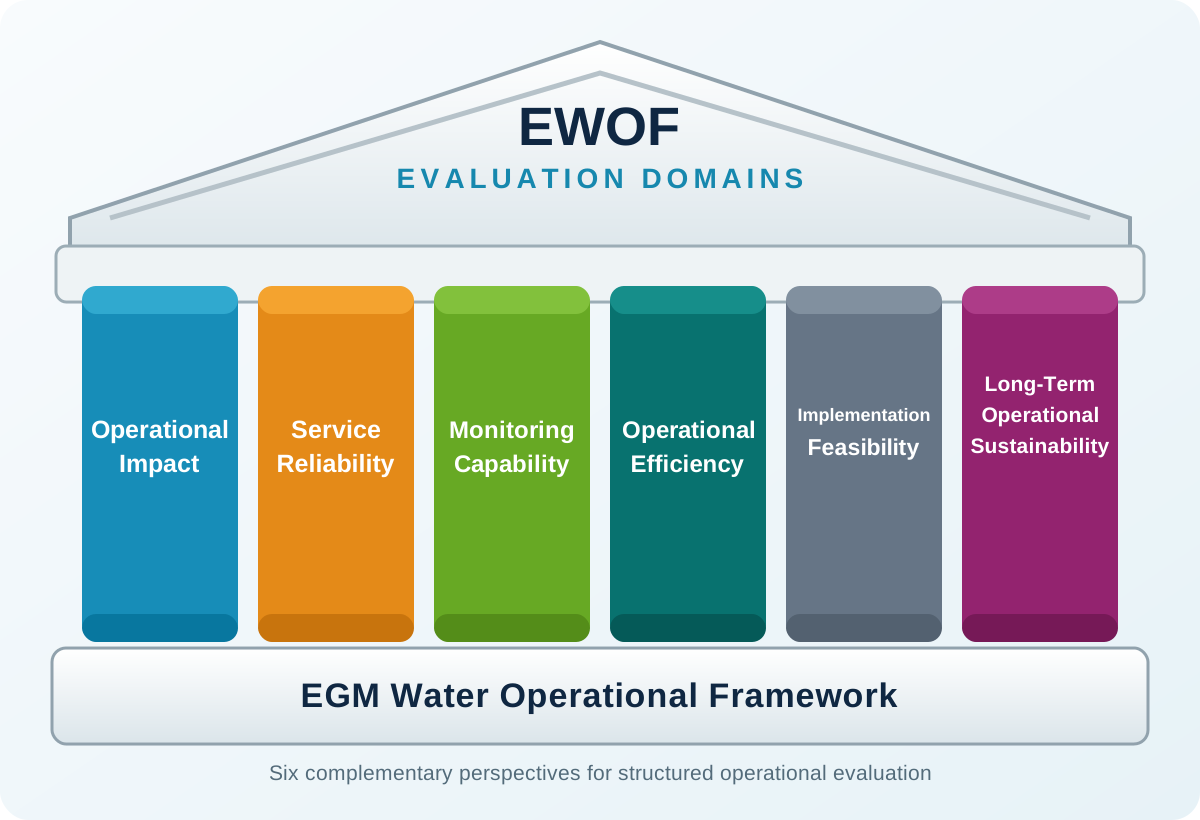
Six evaluation domains support structured comparison throughout the operational improvement cycle.
Core Principle
The Continuous Improvement Cycle
The framework moves through six operational stages. After Learn, Repeat returns the process to Understand as conditions, evidence, and priorities evolve.
Six Operational Stages
The stages provide a structured sequence for organizing evidence, decisions, actions, verification, and learning. Repeat returns the framework to the first stage for the next cycle.
Understand
What's happening, and what needs attention?
Define the condition, possible impact, operational context, authority, constraints, and immediate information gaps.
Assess
What do we know, and what still needs checking?
Organize relevant evidence, information-quality notes, uncertainties, and the expected operating condition when later comparison requires one.
Prioritize
What matters most right now?
State the priority and next decision based on local consequences, urgency, uncertainty, and authorized capacity.
Improve
What's the next safe, authorized action?
Execute the selected action within approved procedures, assigned authority, safeguards, and operating constraints.
Verify
Did it actually work?
Use observed evidence to confirm whether the intended operating condition was achieved, including unexpected effects and the next disposition.
Learn
Retain a concise asset-linked event record, unresolved issue, lesson, or trigger for structured review.
Areas of Application
The framework can support evaluation across selected areas of water utility operations, adapted to local conditions, available evidence, and utility authority.
Interested in discussing how the framework could apply to your utility?
Every utility is different. Let's start with understanding yours.